
Cosmetic Peptides : From Mechanism to Manufacturable Supply
From Mechanism to Manufacturable Supply
Peptides are strategic innovation drivers across dermal science, cosmeceuticals, and emerging longevity research.
But success in peptide programs rarely depends on biology alone.
The real differentiator lies in manufacturability, route selection, supplier quality, and scale-up strategy.
This article explores the science behind cosmetic peptides — and what it takes to move from sequence concept to scalable commercial supply.

Peptides are short amino acid chains acting as highly specific signaling molecules.
In dermal systems, they:
- Stimulate collagen production
- Activate repair pathways
- Enhance hydration support
- Modulate cellular signaling
Understanding mechanism early improves:
- Sequence selection
- Route feasibility
- Impurity profile control
- Downstream cost management
Mechanism decisions directly influence route complexity and scale economics.
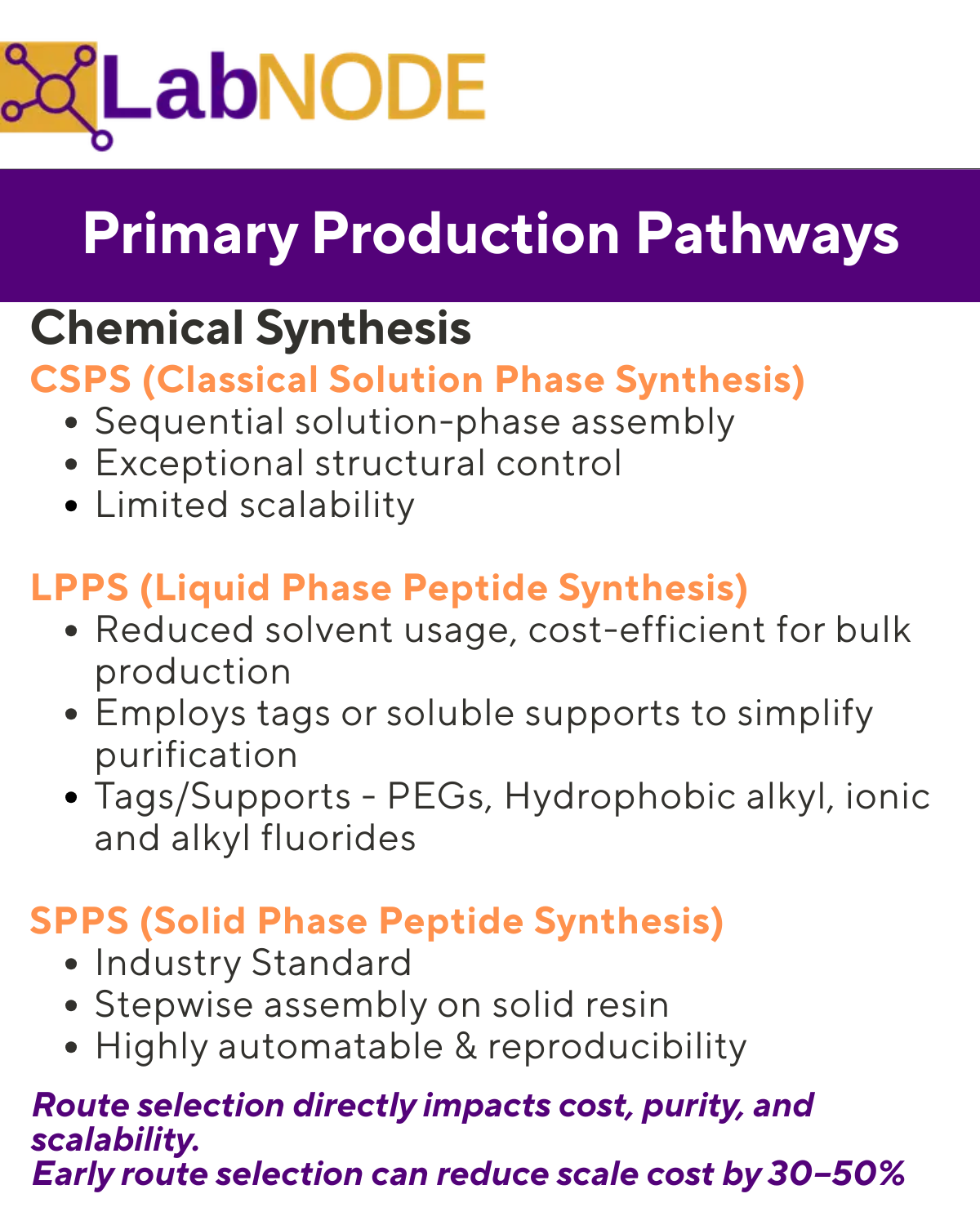
Chemical Synthesis
CSPS (Classical Solution Phase Synthesis)
- Sequential solution-phase assembly
- High structural control
- Limited scalability
LPPS (Liquid Phase Peptide Synthesis)
- Reduced solvent usage
- Cost-efficient for bulk production
- Utilizes PEG, hydrophobic alkyl, ionic supports
SPPS (Solid Phase Peptide Synthesis)
- Industry standard
- Resin-based stepwise assembly
- Highly automatable and reproducible
Route selection directly impacts cost, purity, and scalability.
Early route selection can reduce scale cost by 30–50%.
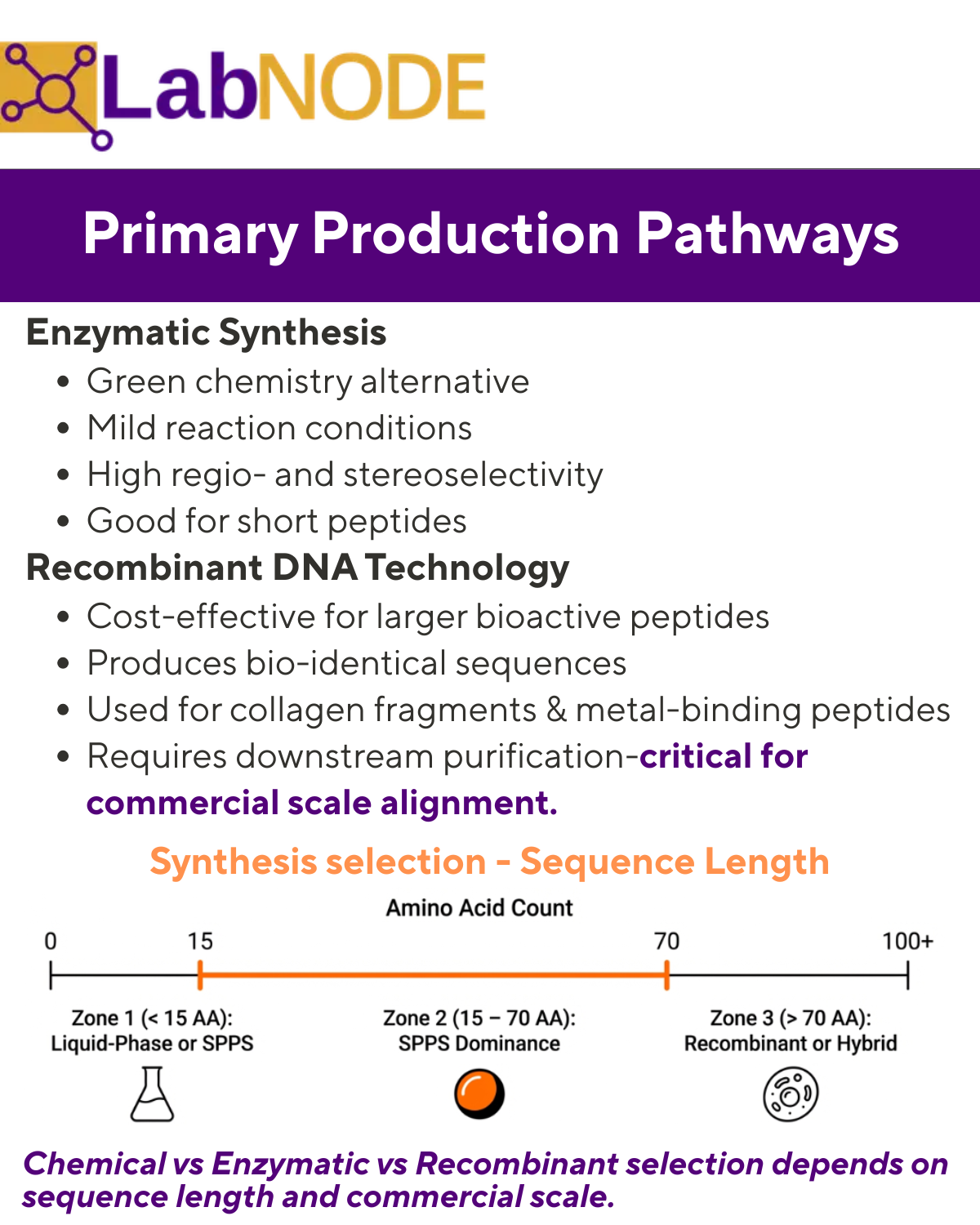
Enzymatic & Recombinant Pathways
Enzymatic Synthesis
- Green chemistry alternative
- High regio- and stereoselectivity
- Suitable for shorter sequences
Recombinant DNA Technology
- Cost-effective for larger peptides
- Produces bio-identical sequences
- Requires downstream purification alignment
Synthesis selection depends primarily on:
- Amino acid count
- Structural complexity
- Commercial volume expectations
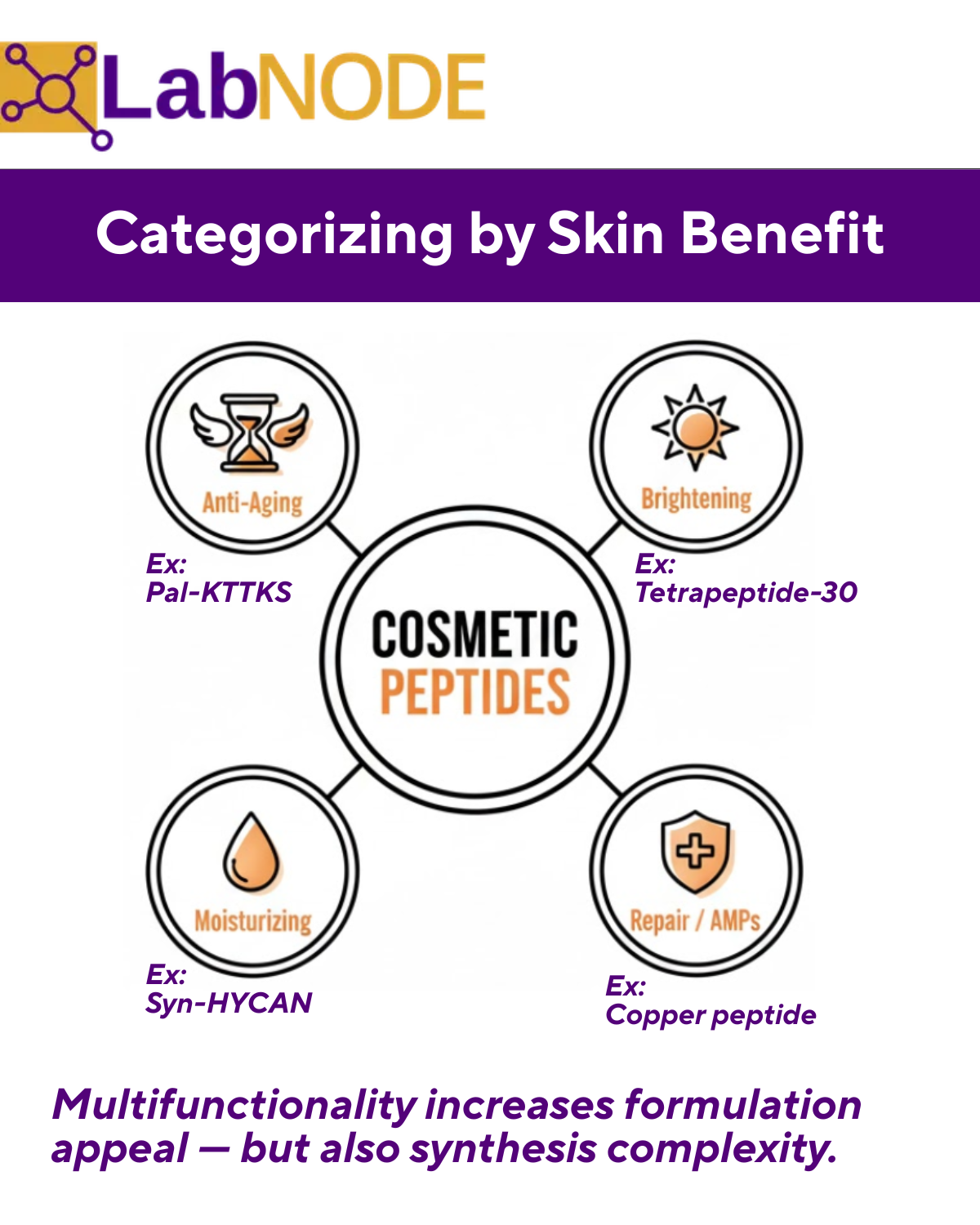
Peptides are increasingly formulated as multifunctional systems.
Categories include:
- Anti-aging
- Brightening
- Moisturizing
- Repair / AMPs
Multifunctionality increases formulation appeal — but also synthesis complexity.
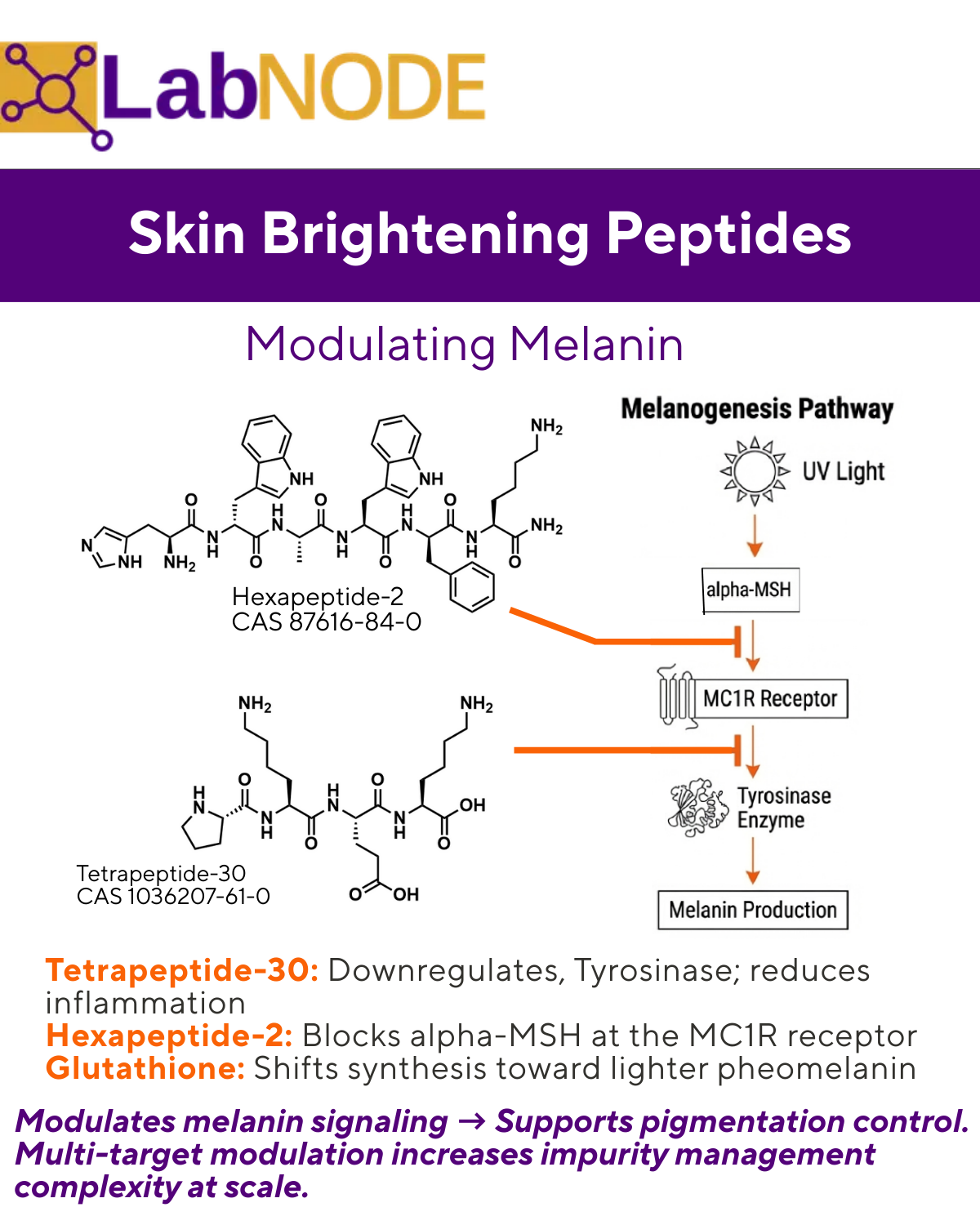
Melanin modulation peptides target multiple signaling nodes:
Tetrapeptide-30
- Downregulates tyrosinase
- Reduces inflammation
Hexapeptide-2
- Blocks alpha-MSH at MC1R receptor
Glutathione
- Shifts melanin synthesis toward lighter pheomelanin
Multi-target modulation increases impurity management complexity at scale.
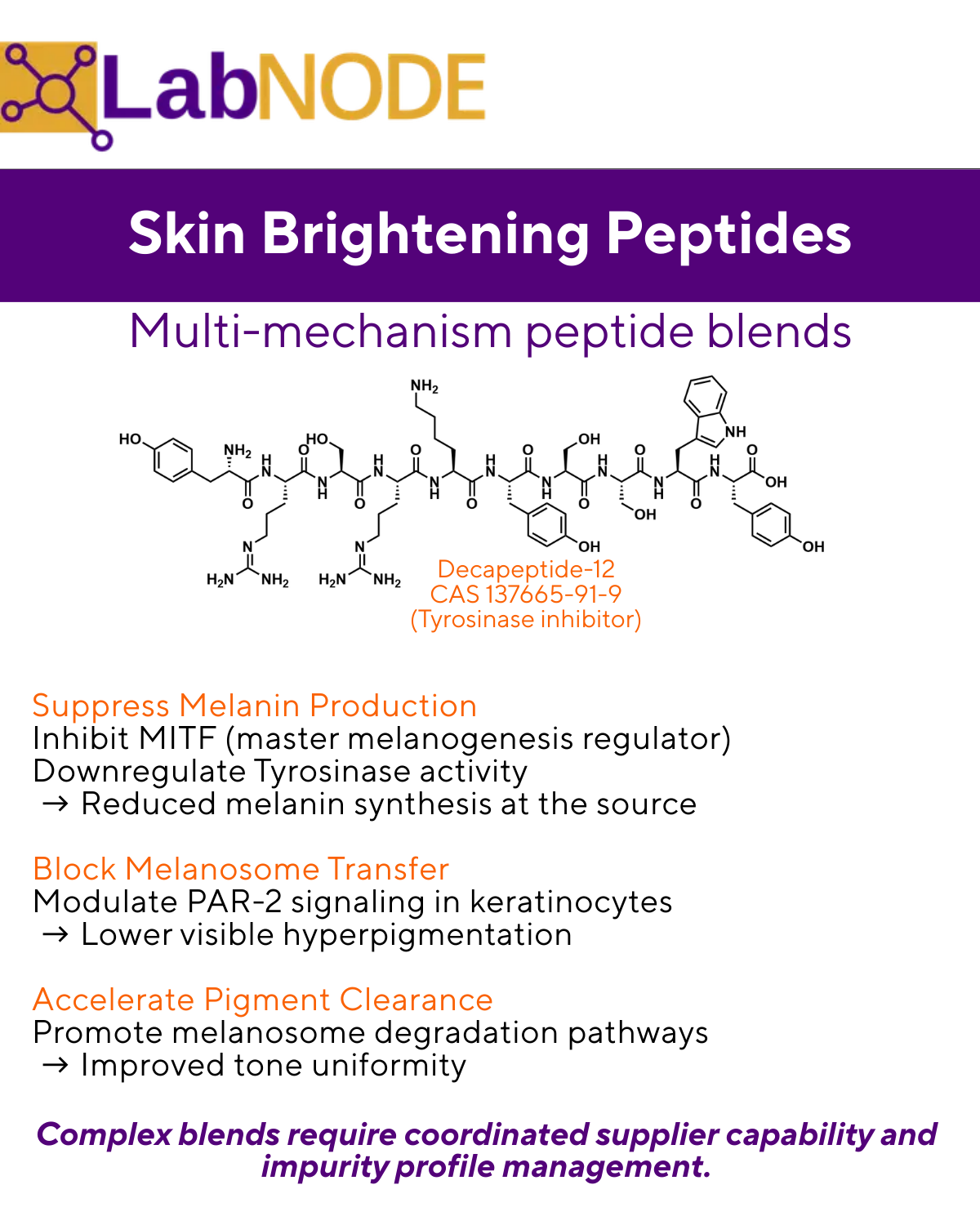
Advanced brightening systems:
- Suppress melanin production
- Block melanosome transfer
- Accelerate pigment clearance
Complex blends require coordinated supplier capability and impurity profile control.
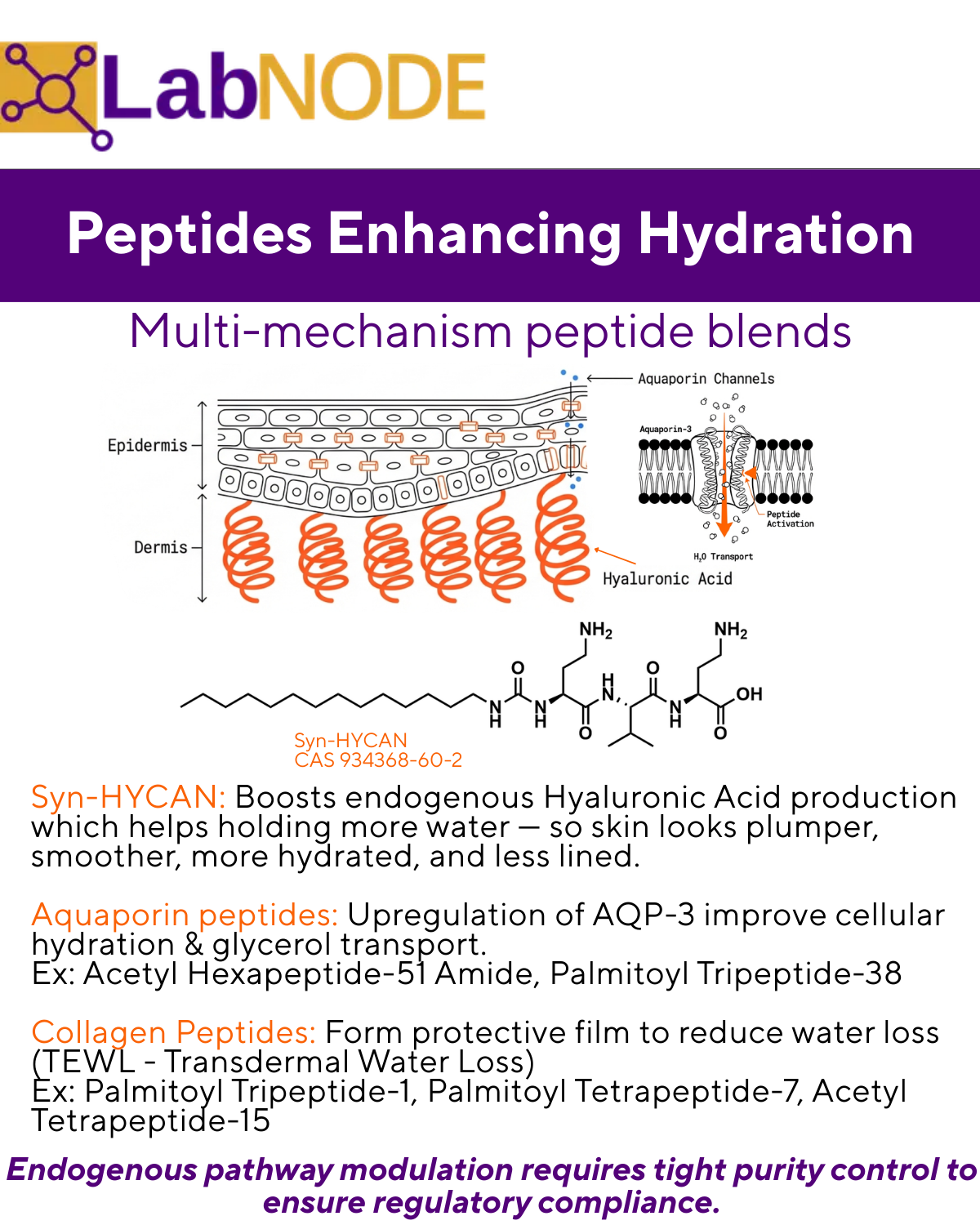
Hydration-focused peptides act through:
Syn-HYCAN
- Boosts endogenous hyaluronic acid production
Aquaporin peptides
- Upregulate AQP-3 for improved cellular hydration
Collagen peptides
- Reduce TEWL (Transdermal Water Loss)
Endogenous pathway modulation requires tight purity control to ensure regulatory compliance.
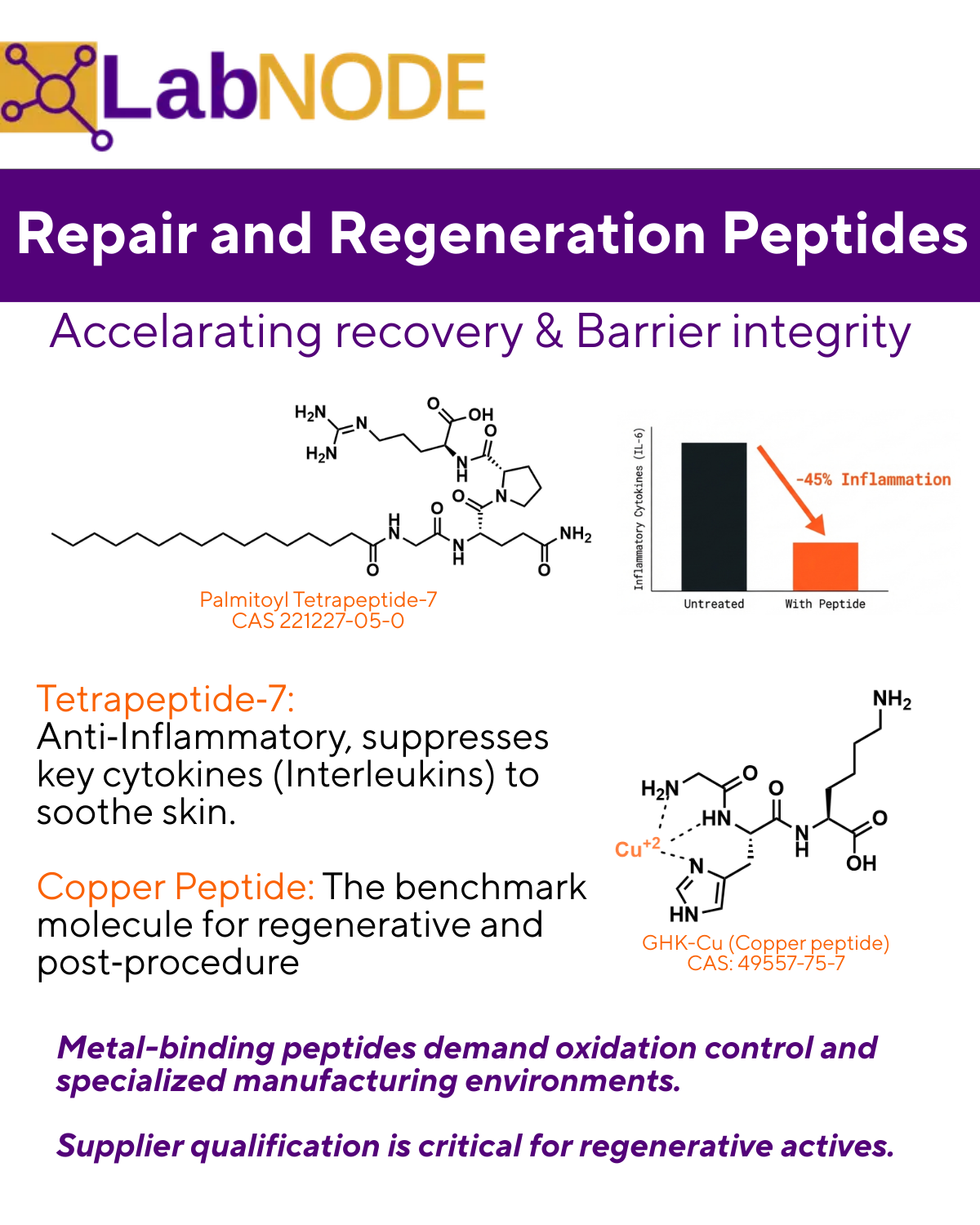
Tetrapeptide-7
- Anti-inflammatory
- Suppresses cytokine signaling
GHK-Cu (Copper peptide)
- Benchmark regenerative molecule
- Supports post-procedure recovery
Metal-binding peptides demand oxidation control and specialized manufacturing environments.
Supplier qualification is critical for regenerative actives.

Peptide commercialization requires alignment across:
Sequence → Route → Supplier → Scale
Labnode operates as a Hybrid Scientific + Sourcing Partner, aligning mechanism design with commercial supply reality.
We support:
- Supplier identification & qualification
- Custom peptide sourcing
- Route optimization
- Cost modeling
- CRO/CDMO partner matching
Planning a Peptide Launch or Scale-Up?
Before scale introduces cost pressure or impurity risk — evaluate the sequence strategically.
📩 info@labnode.co
Or connect with Labnode on LinkedIn.